

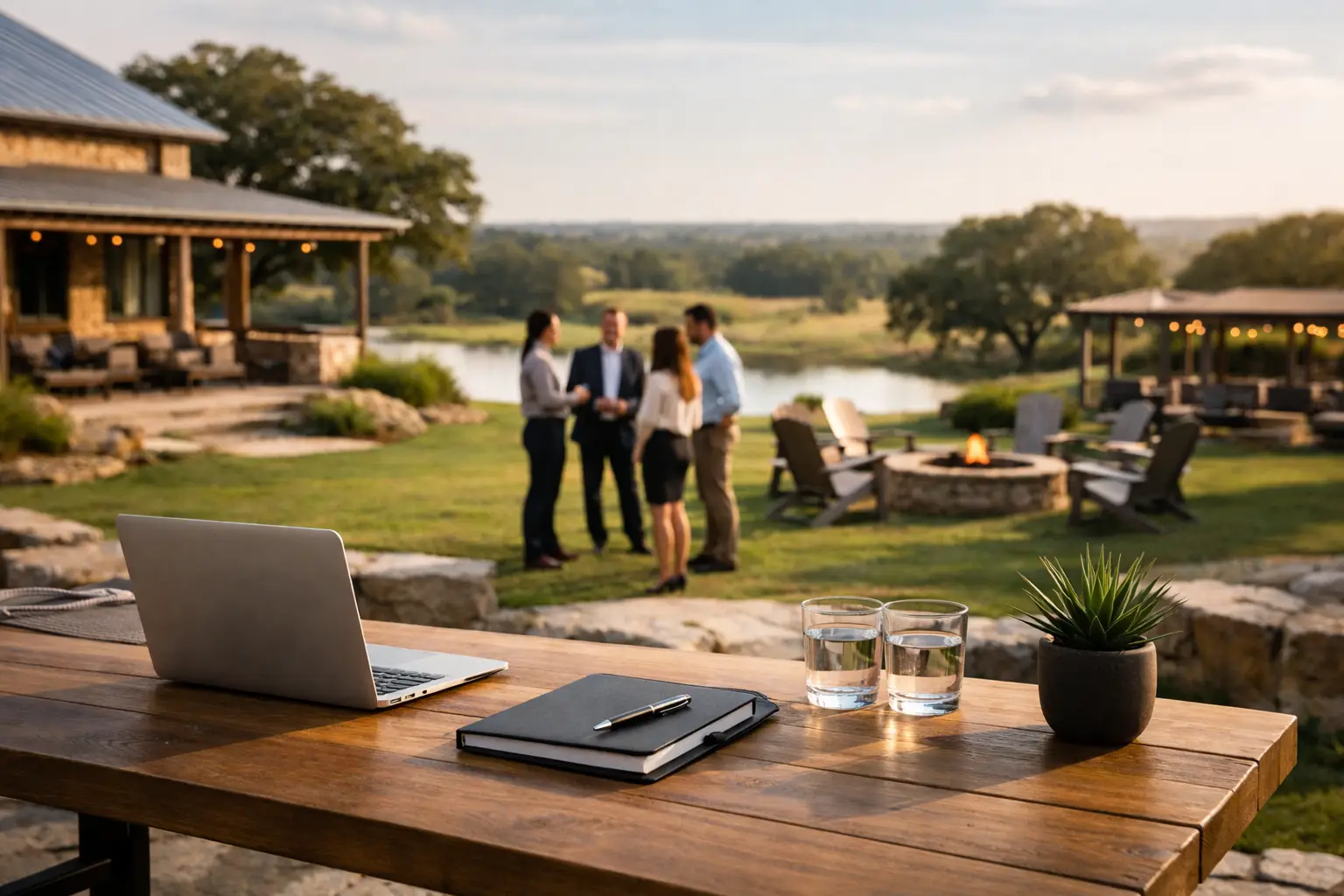
A company offsite venue Texas teams choose should do more than provide a conference room and a block of hotel rooms. The best offsites create a change of pace that makes people more present, more comfortable, and more willing to connect beyond the agenda. When your team can meet, dine, relax, and stay together in one beautiful setting, the event begins to feel less like a meeting away from the office and more like a shared experience worth remembering.
For business owners, executive assistants, and team leaders, that distinction matters. A thoughtfully planned offsite can make room for strategic conversations, celebrate a milestone, welcome new teammates, or simply give people the time to reconnect without competing calendars and daily distractions.
What Makes a Great Company Offsite Venue in Texas?
Texas gives planners plenty of options, from downtown hotels to ranch properties and private estates. The right fit depends on your team’s size, travel needs, goals, and preferred pace. Still, the strongest venues tend to solve the same practical challenge: they bring people together without making the logistics feel fragmented.
A venue with both gathering areas and overnight accommodations offers a meaningful advantage. Instead of shuttling guests between a hotel, restaurant, and meeting room, your group can settle into one destination. There is time for a productive morning session, an unhurried lunch, a casual afternoon activity, and conversations that continue naturally over dinner.
That kind of continuity is especially valuable for teams that rarely gather in person. Remote employees and multi-location organizations often need more than a polished presentation space. They need room to build familiarity, share a meal, and see one another as people rather than names on a screen.
Privacy changes the tone of the retreat
A private setting allows your group to be fully present. Teams can speak candidly during planning sessions, celebrate wins without feeling rushed, and enjoy downtime without sharing every common space with other travelers. For leadership retreats, confidential strategy discussions, and culture-focused gatherings, this privacy can be as valuable as the meeting space itself.
It also gives the event a more personal feel. Rather than adapting your plans to a busy hotel schedule, you can create a rhythm that suits your people. Maybe that means a later breakfast, a long outdoor lunch, or an evening gathering that does not need to end when a ballroom rental window closes.
Look Beyond the Meeting Room
A comfortable meeting area is essential, but it is only one part of a successful company offsite. Ask what happens before the first session and after the final presentation. Those in-between moments often become the most memorable part of the trip.
When evaluating a company offsite venue in Texas, consider whether the property supports both focused work and genuine rest. Spacious accommodations, inviting common areas, outdoor space, and places to share meals can help a group move easily between business and connection. The goal is not to fill every hour. It is to give people enough structure to accomplish something meaningful and enough breathing room to enjoy being together.
For some teams, an offsite should feel energetic and activity-driven. For others, the better choice is a quiet, refined environment where leaders can think clearly and employees can recharge. Neither approach is wrong. It depends on whether your priority is collaboration, celebration, strategic planning, recognition, or a blend of all four.
Lodging is not an afterthought
Overnight comfort directly affects the quality of the gathering. Guests who have a restful place to retreat between sessions arrive more engaged, especially during a multi-day event. Look for accommodations that feel intentional, with generous room layouts, modern furnishings, thoughtful amenities, and enough space for individuals to enjoy a little privacy.
Keeping the group on-site also makes attendance easier. No one has to coordinate rides back to a separate hotel, worry about late-night travel, or miss the informal conversations that happen after dinner. Those relaxed moments are where a new hire may get to know a company founder, or a cross-functional team may find common ground before the next day’s work begins.
Choose a Setting That Feels Like an Escape
The location should support the purpose of the offsite. A change of scenery helps people step out of familiar routines, but the destination should still be accessible enough that travel does not consume the experience.
South Texas offers a distinctive balance of warmth, open skies, regional character, and hospitality. It can feel removed from the day-to-day without requiring an overly complicated trip. For teams based in Texas or nearby, that makes the region a natural choice for a weekend retreat, an annual planning session, or a midweek gathering that feels special without becoming a major production.
A beautiful setting is not just a backdrop for photographs, although that certainly adds to the experience. It can influence the way guests feel throughout the event. Natural surroundings, comfortable outdoor areas, and an atmosphere that encourages people to slow down can make a packed agenda feel more manageable.
At The N.E.S.T, groups can enjoy a South Texas retreat experience designed around that balance: elevated accommodations, room to gather, and a welcoming atmosphere that makes it easy to transition from productive sessions to relaxed time together.
Plan for Meals That Bring People Together
Food is often where an offsite becomes more than a schedule of meetings. A shared breakfast starts the day with ease. A well-planned lunch gives people time to reset. Dinner creates space for stories, appreciation, and conversations that may not happen at a conference table.
When selecting your venue, think through how meals will fit into the flow of the event. On-site dining options or a setting that accommodates catered meals can simplify planning and keep your group connected. A venue that understands hospitality will help you create an experience that feels cared for, not overly formal or overly complicated.
There is also a practical side to this decision. When food, lodging, and gathering spaces are coordinated in one place, planners have fewer moving pieces to manage. That means more time to focus on the agenda, guest experience, and the details that reflect your company culture.
Build an Agenda With Space to Breathe
An offsite does not need to be packed from sunrise to bedtime to be valuable. In fact, over-scheduling can leave guests feeling like they attended a longer version of a normal workday. Build in pauses that let people enjoy the property, call home, take a walk, or sit with a colleague outside the confines of a formal session.
A strong two-day format might include an arrival window and welcome dinner on the first evening, followed by a focused work session the next morning. After lunch, shift to a lighter activity or free time before closing with a celebratory meal. The second day can hold strategic discussions, small-group planning, and a clear closing conversation before departure.
The details should reflect your team. A sales organization might want recognition moments and high-energy collaboration. A leadership group may need a quieter environment for long-range decisions. A growing company may benefit from shared meals and simple activities that help new employees form relationships. The venue should give you flexibility rather than force your event into a preset format.
Questions to Ask Before You Book
Before making a final decision, confirm how the property will support your full guest experience, not just the main meeting. Ask about overnight capacity, room arrangements, gathering spaces, dining possibilities, parking, arrival timing, and options for customizing the event. Clarify which amenities are included and what support is available as you plan.
It is also wise to consider the feel of the property in person. Photos can show style, but a visit can reveal whether the venue feels comfortable, private, and easy for a group to navigate. Pay attention to where people might naturally gather, where quieter conversations could happen, and whether the setting matches the tone you want your employees to associate with the event.
The right company offsite is not simply a place to get work done elsewhere. It is an opportunity to show your team that their time together matters. Choose a venue that gives them room to think, connect, celebrate, and leave with a stronger sense of where the company is headed.